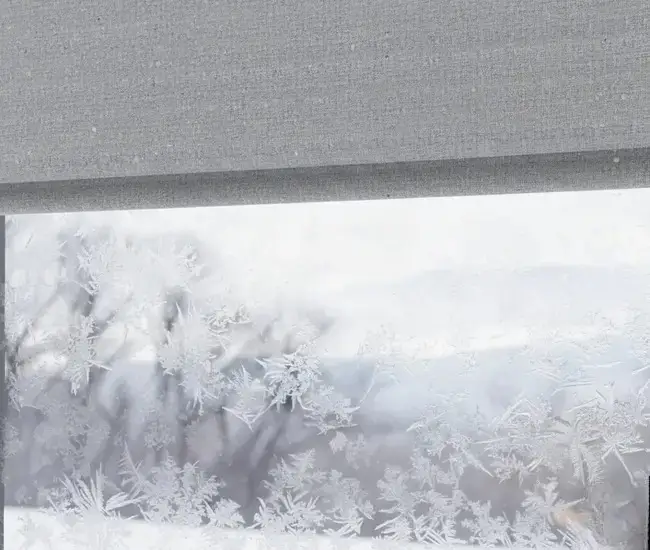
Roller blinds can make a room feel more comfortable in winter by covering cold glass and limiting air movement near the window. However, a typical single-layer roller shade is not the most insulating window treatment.
Its winter performance depends on the fabric, fit, edge coverage, mounting position, and condition of the window.
Choose a closely fitted roller shade with a dense or backed fabric when you want winter comfort together with privacy and light control. If maximum insulation is the priority, a cellular shade will usually be the stronger option because its pockets trap air.
What Are Winter Roller Blinds?
“Winter roller blinds” is not a distinct product category. The term generally describes roller shades selected and installed to perform better during cold weather.
Useful winter attributes include dense or backed fabric, close coverage, minimal avoidable gaps, and a mounting position that keeps the material reasonably close to the opening.
A shade can reduce exposure to a cold window surface, but it cannot repair failed seals, stop air leaking through the frame, or provide the same performance as an insulated window.
Are Roller Blinds Worth Using in Winter?
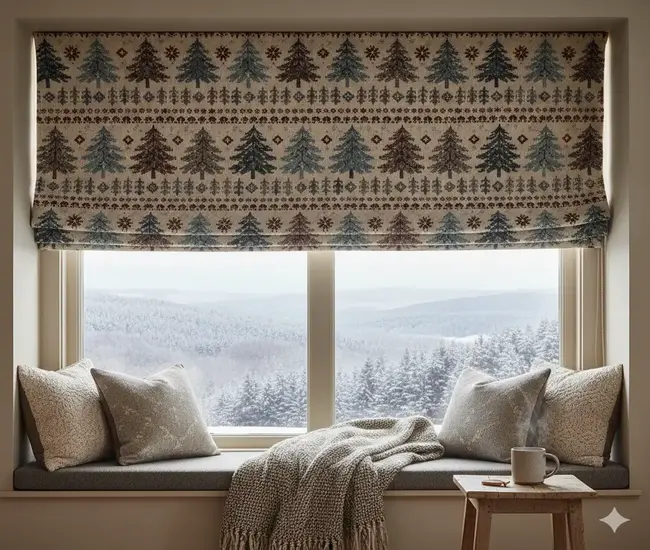
Roller blinds can be worthwhile when you need privacy, glare control, and modest thermal support. Existing shades may perform better through improved timing, edge coverage, or layering.
They may not be the best investment when the window has significant air leakage or when insulation is the only goal. Seal obvious drafts and compare other insulating treatments before replacing a functional shade.
Avoid calculating payback from a fixed percentage or universal energy-saving estimate. Heating costs vary with climate, window type, glass area, fuel price, thermostat setting, fabric, installation, and how consistently the shade is used.
A U.S. Department of Energy report explains how cellular shades trap air and can provide stronger insulating performance than conventional window coverings.
Which Option Fits Your Winter Window Problem?
| Your main concern | Recommended starting point |
|---|---|
| Privacy, glare control, and some winter comfort | Choose a dense or backed roller shade with good window coverage |
| Maximum insulation during cold weather | Compare well-fitted cellular shades with available performance information |
| Air leaking through the window frame | Repair failed seals or add appropriate weatherstripping before replacing the shade |
| Existing roller shades with noticeable edge gaps | Review the mounting position, overlap, and compatible side-channel options |
| Condensation behind a closed shade | Improve moisture control and ventilation, and inspect the window for persistent problems |
| Daylight during sunny winter hours | Open shades on sun-facing windows, then close them when the glass becomes colder |
A window covering should be selected according to the actual problem. Roller shades can improve privacy, light control, and comfort near cold glass, but they are not a substitute for window repair or a higher-performing insulating shade.
Factors That Affect Winter Performance
| Attribute | Why it matters |
|---|---|
| Fabric construction | Dense or backed fabric generally creates a more substantial barrier than open-weave or sheer material, although fabric thickness alone does not establish a specific insulation rating. |
| Mount and overlap | A shade that covers the opening with minimal edge gaps generally performs better than one that leaves exposed glass. An outside mount may provide better coverage, while compatible side channels can further limit airflow around the fabric. |
| Window condition | A shade cannot compensate for major drafts, failed seals, or damaged glazing |
| Daily operation | Closing at appropriate times is necessary to receive any practical winter benefit |
Measure each window according to the selected product rather than using one universal deduction. If light or air movement around the edges is noticeable, review these roller-blind gap solutions.
What We Check When Recommending Roller Shades for a Cold Room
When evaluating a roller shade for winter use, we look beyond fabric opacity. We consider the amount of glass exposed around the fabric, whether an inside or outside mount provides better coverage, interference from handles or trim, the window’s condition, and whether the homeowner also needs daylight or nighttime privacy. These details often influence comfort more than the word “thermal” in a product description.
Benefits of Roller Blinds in Winter
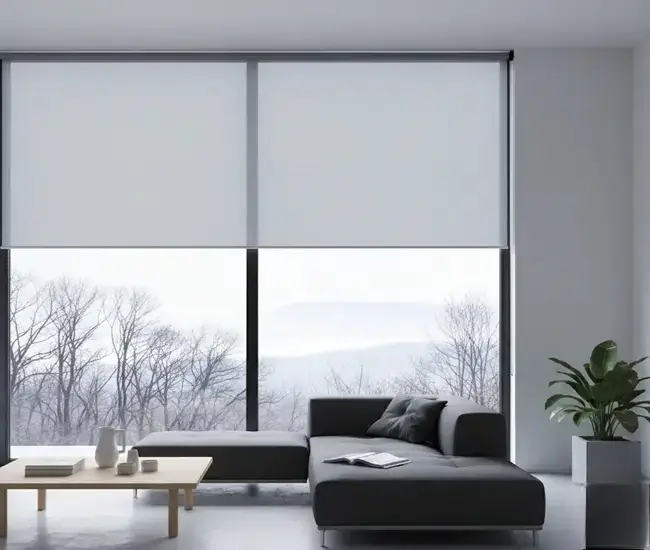
- Comfort near cold glass: A lowered fabric panel separates the occupied room from the window surface, which may reduce cold-window discomfort near beds, desks, and seating.
- Nighttime privacy: Dense fabrics limit views through the material during longer winter nights, although edge gaps and lighting still matter.
- Winter glare control: The shade can cover low-angle sunlight affecting televisions or computer screens without remaining fully closed all day.
- Compact coverage: Roller shades suit windows where deeper layered treatments could interfere with furniture, trim, or operating hardware.
- Year-round use: The same shade can provide light control and privacy in other seasons; separate summer and winter blinds are usually unnecessary.
Disadvantages of Roller Blinds in Cold Weather
- Lower insulation than cellular shades: A flat fabric panel does not contain insulating honeycomb cells. Compare the options in cellular shades versus roller shades.
- Edge gaps: Inside-mounted roller shades require operating clearance, so some space beside the fabric is normal.
- Limited draft control: A roller shade is a window covering, not weatherstripping. Air leaking through the frame requires a separate repair.
- Potential condensation: A closely fitted closed shade can reduce warm-air circulation at cold glass. Check the window for moisture and address persistent condensation.
- Reduced daylight when closed: Dense and blackout fabrics may require more artificial light during daytime use.
Which Roller Shade Fabrics Work Best in Winter?
- Blackout or backed fabric: Useful for substantial light blockage, nighttime privacy, and a denser window barrier. Blackout describes light transmission—not a guaranteed insulation rating.
- Room-darkening fabric: Provides greater light restriction than standard light-filtering material and can suit bedrooms or media rooms.
- Light-filtering fabric: Preserves softer daylight, but thermal performance varies with its construction and backing.
- Solar or sheer fabric: Prioritizes view-through, glare reduction, or daylight. Its more open construction is generally less suitable when winter insulation is the main objective.
The roller shade buying guide explains how opacity, control system, mounting style, and room use affect product selection.
How to Use Roller Blinds During Winter
- Open shades when useful sunlight is warming the room.
- Close them before or after sunset as the glass becomes colder.
- Keep the bottom rail level and the fabric free from obstructions.
- Check for moisture on the glass, especially during very cold weather.
- Open the shade periodically to support air circulation when condensation is present.
Follow the appropriate steps for closing roller shades instead of pulling below the product’s intended stopping point.
How to Improve Existing Roller Blinds for Winter
You may not need replacements. Correct crooked mounting, level the roller tube, seal window drafts separately, and consider compatible curtains when additional room-side coverage is needed.
Replace the shade only when its fabric, size, or control no longer meets the room’s needs.
If drilling is a concern, these ideas for layering curtains over roller shades without drilling may provide another option, subject to the weight limits of the selected hardware.
Frequently Asked Questions
Are blackout roller blinds thermal?
Not automatically. “Blackout” describes the fabric’s ability to block light. Check for product-specific thermal or energy-performance information rather than assuming every blackout fabric provides the same insulation.
Is an inside- or outside-mounted roller shade better for winter?
The better option is the one that provides greater coverage with fewer exposed edges. An inside mount has a compact appearance but normally requires side clearance. An appropriately sized outside mount may cover more of the opening. Window trim, handles, product specifications, and measurement requirements still affect the choice.
Does roller-shade color affect winter performance?
Color can influence how a shade interacts with sunlight, but color alone does not establish its insulating performance. Fabric construction, backing, fit, edge coverage, window condition, and operation are generally more useful selection factors.
Final Recommendation
Choose winter roller blinds when you want a compact combination of privacy, light control, and modest support against cold-window discomfort. Prioritize dense fabric, accurate fit, good edge coverage, and consistent operation. For the highest insulating performance, compare roller shades with rated cellular products before buying.
We are ready to assist with choosing the best weave, thermal properties, opacity, color, & size for winter roller blinds.
We invite you to our 24/7 live chat. Or contact us at (800) 863-6109, or customerservice@affordableblinds.com
Leave a Reply