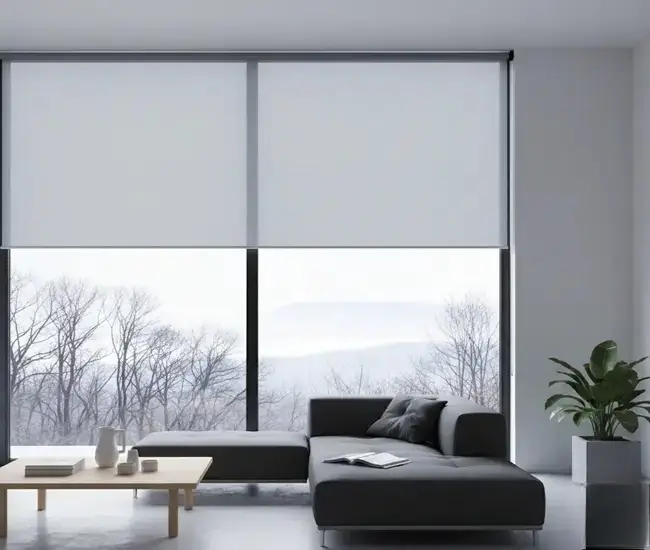
Looking for weather-optimized thermal roller blinds that can keep cold out and retain heat in, enhancing comfort and energy efficiency of your residential or commercial space? This blog post explores various pros and cons of winter roller blinds, so you can make an informed decision when considering them for the upcoming winter months.
According to research by the U.S. Energy Department, roller shades made of thicker, heavier fabrics offer better thermal performance than thinner sheer fabrics. On the other hand, Roman shades offer only a small amount of insulation in summer or winter. Also, roller blinds are usually inexpensive window coverings that are most effective for privacy and partially filtering or totally blocking sunlight.
Compared to slatted aluminum blinds or faux wood blinds which are already a warmer material, fabric roller blinds offer the best insulation in winter, as they are very effective at keeping cold out. The problem with slatted horizontal or vertical blinds is that they have small gaps of 1mm or less even when the slats are tightly closed, allowing more heat to be lost.
Scroll on to learn more about roller blinds for cold weather or heating season.
What are Winter Roller Shades?
Winter roller blinds are thermal roll-up window coverings that are optimized to block external cold and retain internal heat from the heating systems. They are a slim, smart, stylish, and affordable window covering option for modern homes. When mounted inside the frame resses, closer to the window panes, they create a robust 3-layered insulation system, i.e. (1) window panes, (2) fabric panel, and (3) air trapped between the two.
Are Winter Roller Blinds Worth It Given Only 4 or 5 Cold Months in the US?
According to a Wikipedia article on “Climate of the United States”, the coldest average temperatures typically begin in late November or early December and last through late February or early March in the country.
But still investing in new winter roller blinds can be worth it. Here’s why:
Save on Heating Costs: If your heating bills are $1,000 to $1,500, thermal roller blinds will save you around 10% of it, i.e. $100 to $150. On the other hand, the price of a light reflecting insulated roller blind is $43 for a 24” x 36” inches window. If you have two such windows in your bedroom, they’ll collectively cost around $86. And you can easily hang them as a DIYer, thanks to their simple, easy to handle hardware. It means you can easily recover the cost of two the blinds through savings on energy bills. Plus high quality roller shades typically last 6 to 8 years, offering nearly a decade of dependable performance.
8 Benefits of Winter Roller Blinds
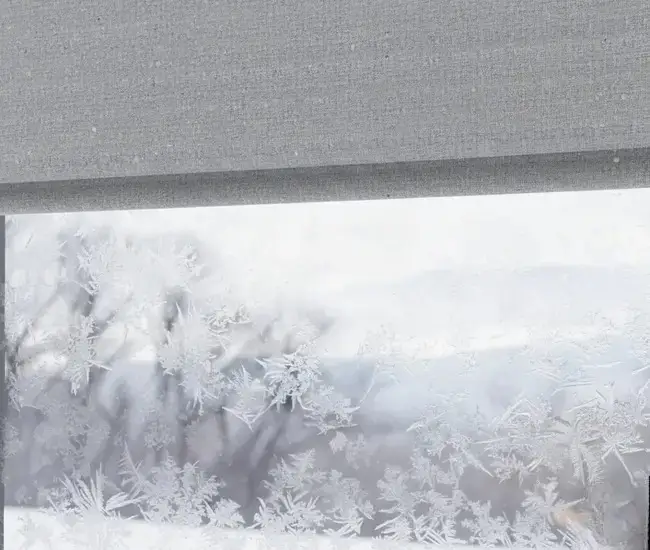
- Enhanced Comfort – The biggest benefit of winter roller window coverings is that they help ensure a cozy, comfortable environment to rest, relax, sleep or work.
- Cold Weather Protection – If you choose thick, drape-like fabrics for roller blinds, they’ll resist winter gusts, drafts, and freezing temperatures. It will make you sufficiently immune to the harsh weather on the outside, and help you stay safer and healthier.
- Cut Down on Energy Bills – CBS News, an American TV network, reports heating costs to rise over $1,518 in 2025 and onwards. And thermal roller blinds have the potential to cut down this cost to $1,368 (or even lower to $1,321).
- Less Stress on Heating Systems – If heat is retained and cold is prevent from coming in, your room heaters, air conditioners, and other heating systems will have to work less to regulate temperature at 27 degrees centigrade. It will help them to keep working longer with the same efficiency.
- Reusable over Several Winter Seasons – Roller blinds with high quality materials and construction can typically give you a decade of dependable performance, without losing their aesthetic appeal.
- Can Work Equally Well in Other Weathers – Roller shades are available in various opacities (sheer, light filtering, room darkening, and blackout) which makes them an all-weather window treatment solution.
- Child Safe – Winter roller shades come with a child-safe cordless option to 100% conform with the New US Federal regulations which prohibit the sale or use of the most corded custom window coverings due to severe strangulation risks to the children.
- Noise Cancellation – Depending on the quality of material and fit, roller blinds can partially or completely prevent the howling roar of a winter storm from disrupting your sleep.
What are Disadvantages of Roller Blinds for Cold Months?
- Heat Retention: Roller blinds do not retain heat as effectively as cellular shades. And double cellular shades provide even better insulation.
- Light Leakage: Being thin and lightweight, roller blinds will sway even in light breeze, causing light bleeding around the edges.
- Less Flexibility in Light & Privacy Control: Unliked top-down/bottom-up blinds, roller shades cannot be adjusted with top open and bottom closed to provide both light and privacy.
- Durability: May not be as sturdy and durable as shutters.
- Window Shape: Roller blinds are not ideal for unusual, odd-shaped windows (like bay or bow windows) – only suitable for standard rectangular windows.
What to Do with Your Existing Summer Blinds?
You can either keep your existing summer blinds of reuse in the next hot season or donate them to a charity like Habitat for Humanity ReStore that functions in each of the 50 states.
4 Functional Variants of Winter Roller Blinds to Choose From
- Blackout Roller Blinds with a Thermal Liner – best for keeping cold and light out of bedrooms, media rooms, and kids’ sleeping areas
- Light Filtering Roller Shades – ideal for living rooms, dining areas, bedrooms, & home offices, & laundry room.
- Sheer Horizontal Zebra Roller Shades – Instantly switch between light filtering and blackout modes by sliding across the alternating sheer and opaque slats, while maintaining thermal protection in both modes.
- Motorized Roller Shades – Operate them with a wireless remote control or voice commands or preset them to open, close, or adjust during different times of the winter days.
Frequently Asked Questions
Which blinds are best for winter?
Insulated blinds, such as thermal roller blinds and honeycomb shades, are best known for their ability to reflect light and heat striking on either side of the fabric. They are becoming increasingly popular among homeowners and businesses to keep heat in and prevent cold from leaking in through windows in winter.
Do roller blinds keep heat in in winter?
Yes, roller blinds can create an insulation barrier between the cold air outside and warm air inside, reducing heat loss by 40% or more. If you add side channels and a thermal liner, they will further decrease heat loss through the windows. Their functionality will get reversed in summers, i.e., they will keep cool air in and heat waves out.
What type of blind insulates best?
According to the US Department of Energy, cellular shades are the most insulating shades on the market, as they can reduce heat loss through windows by 40% or more, which equals to about 10% savings on energy bills in the heating season (winter). Similarly, they can reduce unwanted solar heat gain through windows by up to 60% in the cooling season (summer).
What is a daylight roller blind?
Made of a sheer, light filtering fabric, a daylight blind is a modern miracle that can simultaneously maintaining privacy and let in lots of solar warmth during the winter months. In this way, it also decreases your dependence on artificial lighting.
Need More Help?
We are ready to assist with choosing the best weave, thermal properties, opacity, color, & size for winter roller blinds. We invite you to our 24/7 live chat. Or contact us at (800) 863-6109, or customerservice@affordableblinds.com.
Leave a Reply